How AELO Swiss Academy Structures Its 18-Month Training Timeline
An 18-month airline pilot program only works if the sequence is disciplined. The calendar has to do more than fit lessons into neat blocks. It has to move students from zero or near-zero operational confidence to a point where they can handle academic pressure, cockpit workload, and the standards expected by airlines. That is true of any integrated route, and it is the lens that makes AELO Swiss Academy’s published training package worth examining closely.
AELO Swiss Academy presents itself as a Swiss aviation training school established in 1985, based at Aerodrome Locarno in Gordola, with a satellite base at Lugano Airport in Agno. It is listed as an EASA Approved Training Organization under approval number CH.ATO.0311. Those details matter because they set the frame for how to read the 18-month promise. An integrated ATPL program is not just a collection of flying hours and theory classes sold under a single price. It is a timetable, and its value depends on how well each piece feeds the next.

What AELO states publicly is quite specific on the ingredients. Its ATPL Integrated program is advertised as an 18-month course that includes 220 flight hours, 1,000 hours of classroom training, EASA exam fees, APS MCC in a Boeing 737 NG simulator, PBN certification, and UPRT in an Extra 200. It also presents the package as fully comprehensive at €104,950. Those are concrete building blocks. Even without a published week-by-week syllabus in front of us, they reveal a clear training logic.
The timeline begins with integration, not accumulation
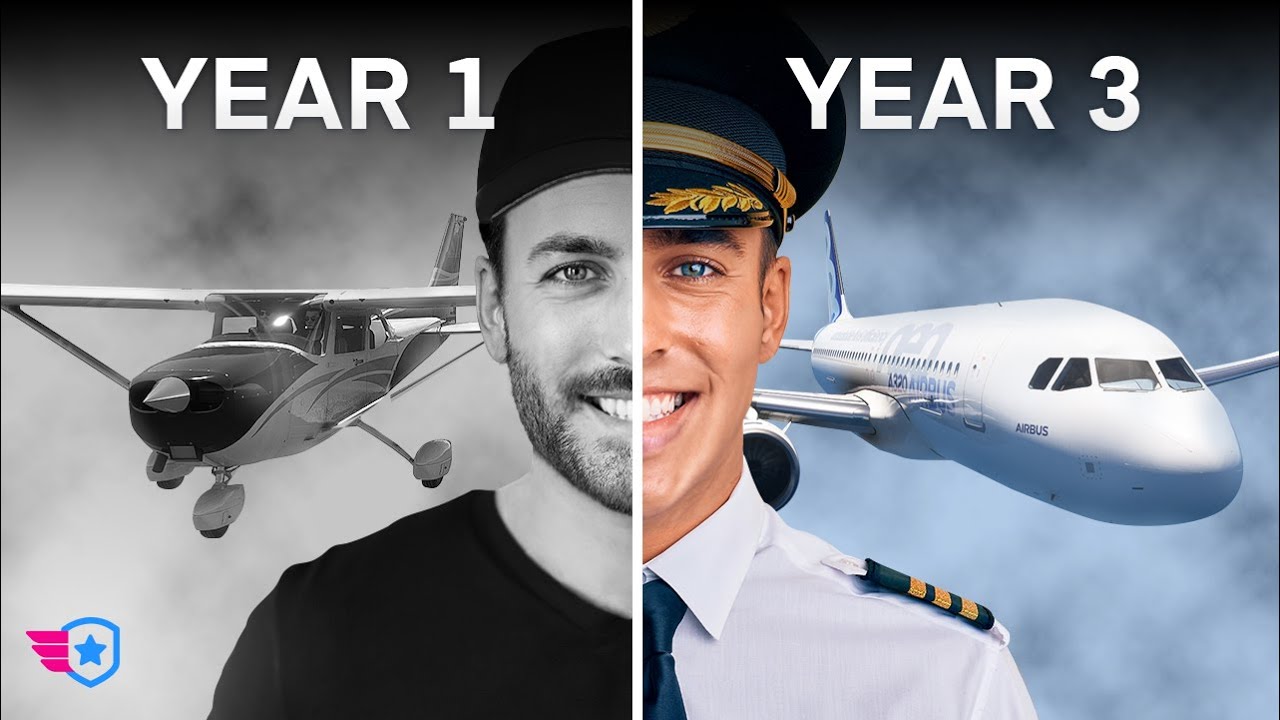
The word “integrated” is often used casually by people comparing pilot schools, but it signals something important. In an integrated pathway, the program is designed as one continuous progression rather than a series of separate licenses picked up over several years. That sounds administrative, but in practice it changes the student experience.
A modular student may spend one period focused only on theory, then break for money, weather, or work, then return months later to pick up the next rating. Skills can plateau or fade between steps. An 18-month integrated course works differently. It tries to keep momentum alive. The academy controls sequence, training standards, and pace so that theory supports flight training and advanced cockpit preparation arrives when the student is ready to use it.
AELO’s package reads exactly like that sort of progression. The 1,000 classroom hours indicate a serious academic phase. The 220 flight hours show that the course is not light on aircraft exposure. Then the APS MCC, PBN, and UPRT components suggest a finishing phase aimed at airline readiness rather than bare-minimum license completion. Put simply, this is not presented as “get a license and figure out the rest later.” It is presented as a structured bridge toward airline recruitment.
Why 18 months is a meaningful number
Eighteen months is short enough to maintain intensity and long enough to include several distinct training layers. That balance is harder to achieve than many students expect.
If a school tries to compress too aggressively, students may survive the schedule but absorb less. Theory becomes cramming. Flying becomes reactive rather than reflective. Errors get corrected, but not fully understood. On the other hand, if the calendar stretches too far, cost pressure rises and training continuity weakens. Students lose rhythm. Skills fragment. Motivation becomes harder to protect.
AELO’s advertised timeline sits in that middle zone where continuity is possible. A student can move through a large theoretical workload, a substantial flight package, and airline-oriented finishing modules without turning the course into a multi-year project. From a training design perspective, that is one of the strongest arguments for an 18-month structure. It keeps the student inside one coherent learning cycle.
There is also a practical psychological advantage. Long aviation training can feel abstract at the start. The first months are heavy on study, procedures, and discipline, and the airline cockpit still feels remote. An 18-month frame gives shape to the effort. Students can see a path from first principles to simulator-based multi-crew preparation without the horizon drifting endlessly away.
The academic load is substantial, and that usually shapes the first part of the calendar
The easiest figure to underestimate in AELO’s published package is the 1,000 hours of classroom training. For many people outside aviation, flight hours sound like the real training and classroom hours sound secondary. In airline pilot development, that is backwards. Theory is not decoration. It is the system that keeps everything else from becoming mechanical.
A thousand classroom hours implies a serious academic commitment. Even if those hours are distributed across the full 18 months, they represent a large share of the student’s working life during the program. They also suggest a training environment where study discipline is not optional. In real training settings, the students who struggle most are rarely the least motivated. More often, they are the ones who assume they can “catch up later” on technical subjects once flying becomes more exciting. Integrated programs punish that habit quickly.
With the facts available, it would be wrong to invent AELO’s exact monthly sequence. Still, the components publicly listed strongly suggest that theory is not an afterthought placed loosely around the flight line. A program with 1,000 classroom hours and EASA exam fees included has to give academics a central place in the timeline. That usually means the student’s early and middle months are built around sustained study pressure, not occasional lectures.
That is healthy. Airline Reddit.com training does not reward charm or improvisation for long. It rewards preparation. A student who has understood systems, air law, planning logic, and instrument concepts in the classroom will learn faster in the aircraft and later in the simulator. The reverse path is far less efficient.
The flight phase is large enough to build more than basic familiarity
AELO states that its integrated course includes 220 flight hours. That is a meaningful number because it suggests exposure well beyond a token hour count designed only to meet a minimum threshold. Flight hours are never equal in value from one training environment to another, but volume still matters. Repetition is where procedures become habits and where errors stop feeling random.
The key point in an 18-month structure is not just that the hours exist, but that they likely sit inside a managed progression. Flying at the start of training teaches one kind of competence. Students learn how to process checklists, hold a visual picture, respond to instructor correction, and avoid being overloaded by basic aircraft handling. Later flying develops another layer, where navigation, judgment, and consistency matter more than the thrill of just controlling the aircraft. Then advanced phases start shifting the student’s mindset again toward standardization, precision, and a more professional cockpit rhythm.
That progression is one of the quiet strengths of integrated programs. Students do not merely “build time.” They encounter different demands at different stages. A lesson that feels difficult in month three may feel simple in month ten because the student’s spare mental capacity has increased. Good training design relies on that. It introduces complexity in steps.
AELO’s published fleet size, 27 aircraft, matters in this context. Fleet numbers alone do not guarantee smooth scheduling, but they do indicate training capacity. For students, availability matters because continuity matters. In pilot training, long gaps between flights are costly. Skills are physical, cognitive, and procedural at the same time. When flying remains regular, students retain more and progress with less waste.
The final phase is clearly aimed at airline transition
The most revealing elements in AELO’s package are arguably not the classroom hours or the total flight time. They are the finishing modules, APS MCC in a Boeing 737 NG simulator, PBN certification, and UPRT in an Extra 200. Those three features say a great deal about how the academy frames the end of its timeline.
APS MCC is not merely another box. In training terms, it marks a shift from single-pilot skill development toward the crew environment airlines actually operate in. Students stop thinking only about “Can I fly the aircraft?” and start working on “Can I function to airline standard inside a two-pilot system?” Those are related questions, but they are not the same. Crew coordination, communication, workload distribution, and procedural discipline become central.
The fact that AELO specifies a Boeing 737 NG simulator for this phase is also telling. The aircraft type in the simulator should not be read as a guarantee of any specific airline outcome, but it does place the student in a recognizably airline-style environment rather than a simplified training abstraction. That matters because many graduates discover that the hardest jump is not raw aircraft control. It is adapting to standard operating procedures, pace, and crew logic under pressure.
PBN certification points in the same direction. Modern airline operations rely heavily on precise navigation concepts, and treating that capability as an explicit part of the package suggests that the academy wants the graduate profile to match contemporary operational expectations rather than stop at a generic license outcome.
Then there is UPRT in an Extra 200. That element stands out because upset prevention and recovery training addresses a very different dimension of pilot competence. It is not about line-oriented routine. It is about understanding aircraft attitude, energy, and recovery in unusual situations. Programs that include dedicated UPRT are acknowledging an uncomfortable truth that experienced instructors know well: a pilot can look polished in normal operations and still be weak when the aircraft picture becomes unfamiliar. That gap is dangerous. Specific upset training helps close it.
Taken together, these published components make the back end of AELO’s 18-month timeline look deliberately airline-facing. The course is not advertised as ending at the point where a student merely qualifies on paper. It is built to move toward operational employability.
What the Swiss base contributes to the training identity
Location does not automatically define quality, but it does shape the feel of a school and the daily rhythm of training. AELO is based at Aerodrome Locarno in Gordola and lists Lugano Airport in Agno as a satellite base. That dual-base identity suggests a training operation with a primary center and some extended operational flexibility, though it would be wrong to guess further than the published facts allow.
What can be said with confidence is that a school rooted in an active Swiss aviation environment often presents itself with a certain emphasis on order, standards, and procedural seriousness. That is not a promise of perfection. It is simply part of the institutional character many students seek when they choose a European integrated pathway under EASA approval.
The EASA Approved Training Organization status is the harder fact. Approval number CH.ATO.0311 is not marketing language. It indicates the training organization operates within a defined regulatory framework. For students trying to make sense of competing flight schools, that matters more than glossy photography or broad claims about passion and dreams. Professional pilot training depends on standardization. Regulation is part of that backbone.
The package price only makes sense when viewed against the timeline
AELO advertises the ATPL Integrated package at €104,950 and presents it as fully comprehensive. Price in flight training is rarely meaningful without context. A lower number can hide exclusions that appear later as painful extras. A higher number can be more economical if it genuinely covers the major training stages and avoids fragmentation.
Here, the timeline matters because AELO’s package includes a substantial academic load, 220 flight hours, EASA exam fees, APS MCC in a Boeing 737 NG simulator, PBN certification, and UPRT in an Extra 200. When those components are part of one package, the student is not simply paying for isolated events. The student is paying for continuity, sequencing, and the reduction of uncertainty.
That reduction of uncertainty has real value. One of the more exhausting parts of pilot training is not the work itself, but the financial and planning ambiguity that often surrounds it. Students who begin with one budget and later discover several required add-ons usually lose more than money. They lose focus. They become hesitant at the very stage where commitment should be strongest.
A fully comprehensive promise does not eliminate every possible personal expense a student may face in life. It does, however, make the training roadmap easier to understand. For an 18-month integrated program, that clarity is important.
Career positioning is part of the structure, not just an afterthought
AELO says that 96 percent of graduates found a pilot job within six months, and it lists alumni progression to operators including Emirates, Wizz Air, VistaJet, Transavia, Swiss, SkyAlps, Ryanair, Lufthansa, Lauda, KLM, Etihad, and easyJet. It also advertises a SkyAlps Airlines MPL program with guaranteed placement and describes it as offering a job guarantee. Those are notable claims, and they matter because they show how strongly the academy ties training to employment outcomes.
For a student assessing the 18-month ATPL timeline, the practical reading is this: the course is positioned as a route into the hiring market, not only as a training experience. That distinction matters. Some schools focus almost entirely on the educational side and leave airline alignment relatively loose. Others build their identity around the transition to the right seat.
AELO’s public messaging leans toward the latter. Even the inclusion of APS MCC in a Boeing 737 NG simulator fits that emphasis. It is part of a story about employability, not just qualification. That does not mean every graduate’s path will look the same, and it would be irresponsible to suggest otherwise. Hiring cycles change. Airline demand shifts. Individual performance matters. But the academy is clearly structuring its public offer around the expectation that training should point directly toward work.
What students should understand about pace and pressure
The attractive side of an 18-month integrated timeline is obvious. It is efficient, continuous, and professionally oriented. The demanding side deserves equal attention.
A program that includes 1,000 classroom hours and 220 flight hours inside 18 months is not casual. It asks for consistency over a long stretch. There will likely be periods where theory feels relentless and flying progress feels slower than hoped. That is normal in serious pilot training. Students often imagine a clean upward curve, but real progress usually comes in uneven blocks. One month can feel like breakthrough, the next like consolidation.
There are three pressures students typically underestimate in this kind of schedule:
-
Academic fatigue. Classroom intensity has a cumulative effect, especially when students are also preparing for formal exams.
-
Performance variability. A poor training day does not necessarily mean poor potential, but in an integrated course the calendar keeps moving, which can make setbacks feel larger than they are.
-
The shift from solo competence to crew discipline. Some students fly confidently on their own yet find structured multi-crew procedures unexpectedly demanding.
These are not flaws in the model. They are part of the model. A strong timeline is not one that removes pressure. It is one that introduces pressure in forms the student can learn from.
The structure signals a particular kind of graduate
When you look at AELO’s published 18-month program as a whole, a pattern emerges. The academy is not describing a lightweight path aimed at hobbyists who may someday consider airline flying. It is describing a professional track designed to produce a graduate who has moved through a coherent sequence: deep classroom study, meaningful flight experience, formal exam preparation, and airline-oriented finishing modules.
That sequence matters because it shapes identity as much as skill. Students do not leave an integrated course as the same people who entered it. The strongest programs recalibrate habits, punctuality, briefing quality, procedural language, and tolerance for scrutiny. They make professionalism ordinary. When that transformation happens, the timeline has done its real job.
AELO’s public facts support that reading. An academy established in Switzerland in 1985, operating as an EASA ATO, based at Locarno with a satellite base at Lugano, offering a comprehensive 18-month ATPL Integrated package with 220 flight hours, 1,000 classroom hours, exam fees, APS MCC in a Boeing 737 NG simulator, PBN certification, and UPRT in an Extra 200, is not presenting a loose collection of lessons. It is presenting a structured training arc.
For prospective students, that is the key takeaway. The value of the 18 months lies less in the number itself than in what the number contains. AELO’s advertised structure suggests a timeline designed to carry students from foundational study through practical flight development and into the operational mindset airlines expect. That is what gives an integrated course its shape, and that is what makes the timeline worth examining with care.